The Art of Ottoman-Style Amber Prayer Beads: History, Craft and Today
How Ottoman bead-makers worked amber, the rules that define a 33- or 99-bead Ottoman string, the imame and tassel tradition, what to look for in master work, and how the heritage lives on in pressed amber today.
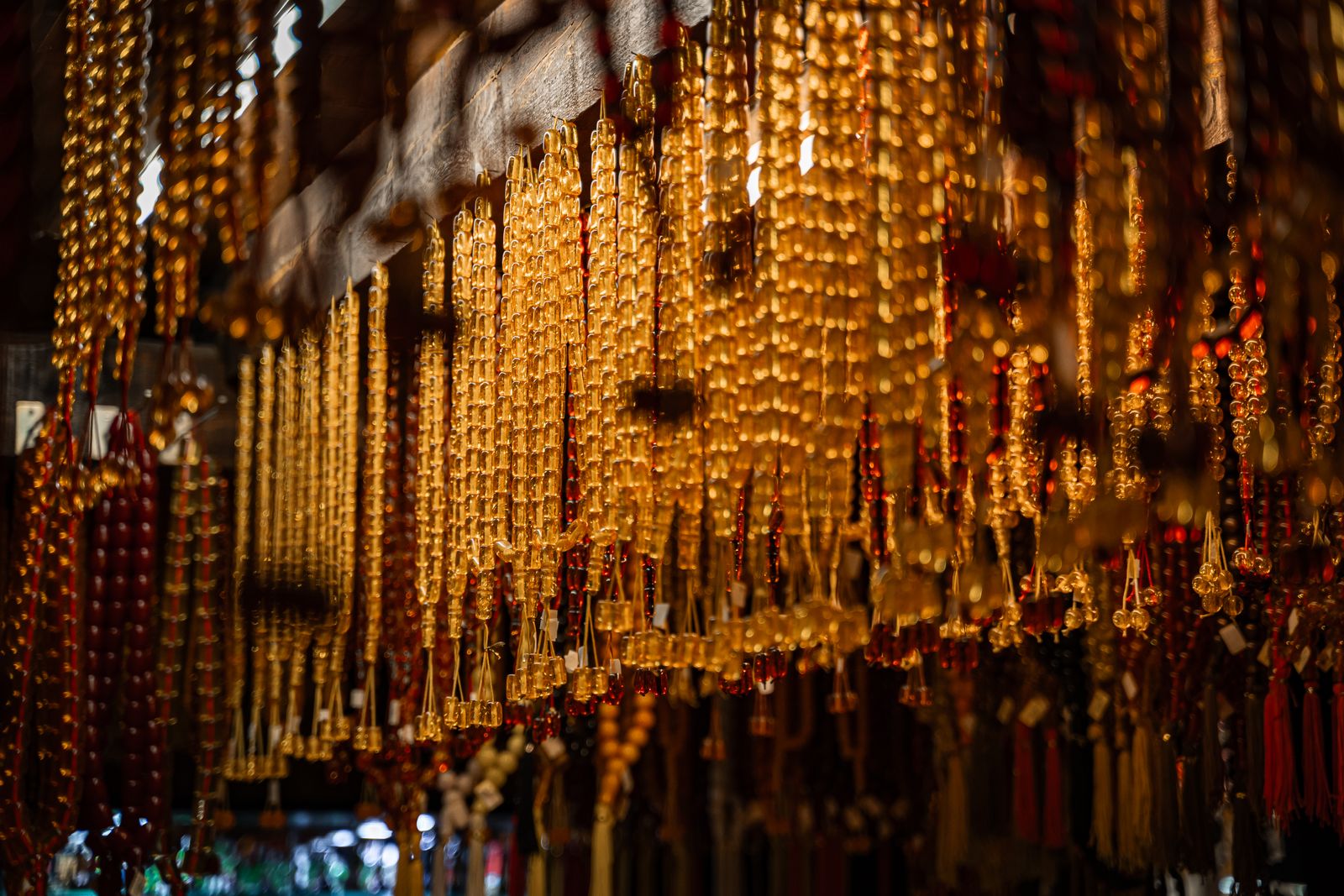
In the Ottoman world, the tesbih (prayer beads) was never just a devotional tool. It was a craft, a gift culture and a measure of taste. At the top of that craft stood amber: warm in the hand, soft-voiced between the fingers, deepening in colour with every passing year. Amber was the most prestigious material of Istanbul's bead-makers. In this article we look at how the Ottoman amber tesbih tradition came to be, what the masters paid attention to, the rules of form that make a string "Ottoman style", and how that heritage continues today through pressed amber.
How Amber Reached the Ottomans
Amber is the fossilised resin of trees that lived millions of years ago. Most of the amber used by the Ottomans came from the Baltic coast, travelling along Black Sea and Danube trade routes to Istanbul. Raw amber leaving Danzig (today's Gdańsk) and Königsberg passed through Crimea and Wallachia, landed at Galata and was distributed to the bead-making and carving workshops around the Grand Bazaar.
The volume of this trade grew markedly from the 17th century onward. For the palace circle, the scholarly class and wealthy merchants, an amber tesbih was a status symbol. The frequent appearance of "kehrübâ tesbih" in gift registers, estate inventories and endowment lists shows how highly the material was valued. Because amber was also used for cigarette holders and water-pipe mouthpieces, the number of Istanbul craftsmen skilled in working it rose quickly.
The Bead-Makers' Guild and the Master-Apprentice Line
Bead-making was organised as a separate trade in the Ottoman Empire. Bead-makers had their own guilds, stewards and markets. Before learning to cut and drill stone, an apprentice spent years learning materials, preparing the master's tools and twisting thread. Touching a fragile and expensive material like amber was possible only after proving competence on bone, wood and tortoiseshell.
That lineage can still be traced today in the master workshops producing handmade prayer beads. The first task a master gives an apprentice is not a perfect sphere, but two beads of identical weight and diameter. In the Ottoman manner, the quality of a tesbih is judged not by the beauty of a single bead but by the harmony of the whole string.
The Measures That Define an Ottoman-Style Tesbih
"Ottoman style" is not a vague compliment; it corresponds to specific rules of form. The main ones are:
Bead count and rhythm
Ottoman strings are mostly 33 or 99 beads. A 33-bead string is completed by a single imame (head bead); in a 99-bead string, every 33 beads is marked by a "durak", a divider shaped differently from the main beads. Dividers make counting easier and give the string a visual rhythm.
Bead shape
The most common Ottoman amber shapes are barley (elongated, slightly pointed at both ends), olive, round and slightly flattened "almond". Barley cut is considered the shape through which amber carries light most beautifully, which is why it remains the preferred form in pressed amber. The barley cut you see in today's rod-pressed amber series is a direct continuation of this tradition.
Imame, finial and tassel
The imame is the head of the tesbih; it is cut with as much care as the beads, usually from the same material and one size larger. The finial above it crowns the end of the string. The tassel is the most characteristic element of an Ottoman tesbih: braided from silk or silk-and-metallic thread, it is chosen to match the colour and weight of the beads. Heavy amber beads are never finished with a thin tassel; the balance would be lost. This elegance is preserved today in tasselled powder amber models.
Cord and tension
Beads are strung not on a single thread but usually on a double-twisted silk or nylon cord. Cord tension determines how the tesbih "draws": an over-tight string feels stiff in the hand, a loose one spoils the sound of the beads striking each other. A master always draws and listens to a tesbih before handing it over.
Why Amber Was So Prized
Amber's place in Ottoman taste was not only about beauty. Three properties set it apart:
- Tactile warmth: Amber warms quickly in the hand and never feels cold like stone. It does not tire the fingers during long recitation.
- Sound: When the beads strike each other they give a full, soft, short note. Glass and stone are sharper; wood is duller.
- Ageing: Amber darkens over time and takes on a "honey" tone. The colour of an old amber tesbih is a silent witness to how many years it has been drawn. We explained the reasons in why pressed amber changes colour.
From Drop Amber to Pressed Amber
In the late Ottoman period amber supply tightened and prices rose. In the same years a method developed in Europe made it possible to fuse small, unworkable amber fragments under heat and pressure into workable blocks. Known as "pressed amber", this material was quickly adopted by Istanbul bead-makers, because it largely kept the warmth and sound of drop amber while offering more uniform colour and larger bead diameters.
Today, when people in Türkiye say "Ottoman-style amber tesbih", the great majority of the products they mean are pressed amber or its sub-types:
- Rod-pressed: pressed into blocks and cut as rods; the most common and durable type.
- Fire-pressed: heat-treated to create flame and vein patterns, so every bead looks different.
- Powder amber: made by pressing finely ground amber; more matte and opaque in appearance.
For the tests you can use to check whether pressed amber is genuinely amber-based, see how to tell genuine amber prayer beads.
What to Look for in Master-Made Amber Beads
The masters who carry the Ottoman manner today, and we who source from them, judge a tesbih by these criteria:
- Uniformity: Beads must match in diameter, length and weight. Laid on a flat surface, the string should show no waviness.
- Centred drilling: The hole must pass through the bead's exact axis; otherwise beads wobble as the string turns.
- Polish: The surface should be smooth but not "plastic-shiny"; amber gives a soft, deep lustre.
- Imame match: The imame should be the same material and tone as the beads, usually one size larger.
- Tassel balance: The tassel must be thick enough to carry the weight of the string and match its colour.
- Drawing sound: Beads striking each other should give a full, short note; ringing or clicking points to a material or cord problem.
At Novatesbih we set this standard, selected master workshops across Türkiye produce to it, and every batch passes final inspection at our centre in Zeytinburnu, Istanbul. We are the single link between you and the master, so when a detail falls short you know exactly who to speak to.
Why Ottoman Taste Is Still in Demand in the Gulf
Ottoman-style amber tesbih is most sought after today in Saudi Arabia, the United Arab Emirates, Kuwait and Qatar. This is not only nostalgia. In the Gulf the tesbih is part of daily life: a men's accessory carried in the jacket pocket, held in the hand or resting on the desk. Barley cut, dark honey and cherry tones, a heavy tassel and a large imame are known in that market as "Istanbul work" and carry a value of their own. We built our wholesale prayer beads programme around the Gulf to meet that demand; see our wholesale export page for country details.
Caring for Amber Beads: Habits Inherited from the Ottomans
The old masters neither dipped amber in water nor left it in the sun. A few rules that still apply:
- Keep the tesbih away from perfume, cologne and alcohol-based products; the polish dulls.
- If it will not be used for a long time, store it in a soft pouch away from light.
- Clean only with a soft, dry cloth; if needed, wipe with a slightly damp cloth and dry at once.
- When the cord loosens or the tassel wears, do not intervene yourself; restringing takes skill.
For restringing, tassel renewal and re-polishing, reach us through the care and repair page.
Frequently Asked Questions
What is the difference between an Ottoman-style tesbih and an ordinary one?
The difference lies less in material than in form and workmanship: evenly cut beads, a proportioned imame, a 99-bead layout with dividers, a balanced tassel and a full drawing sound. A string lacking these is not "Ottoman style" even if it is made of amber.
Can I find a genuine Ottoman-period amber tesbih?
They appear on the antiques market, but they are few and most have been repaired. The practical solution today is pressed amber beads produced faithfully to Ottoman measures.
Which model suits a gift?
For corporate or personal gifts, a 33-bead barley-cut rod-pressed string in dark honey is the safest choice. See our corporate gifts page for ordering terms.
Conclusion
The art of Ottoman-style amber prayer beads rests less on the value of the material than on the master's measure. Even beads, the right imame, a balanced tassel and a full sound: when these four come together, the result is a work of craft beyond a devotional object. We carry this heritage today through pressed amber, master workshops and careful final inspection. Browse the pressed amber collection, visit our contact page with your questions, or check the FAQ.