Why Kuka Wood Prayer Beads Darken: What Is Known
Why kuka beads darken, whether darkening means damage, how to speed it up or slow it down, and how real kuka and stained imitations differ as they age. What users and sellers need to know.
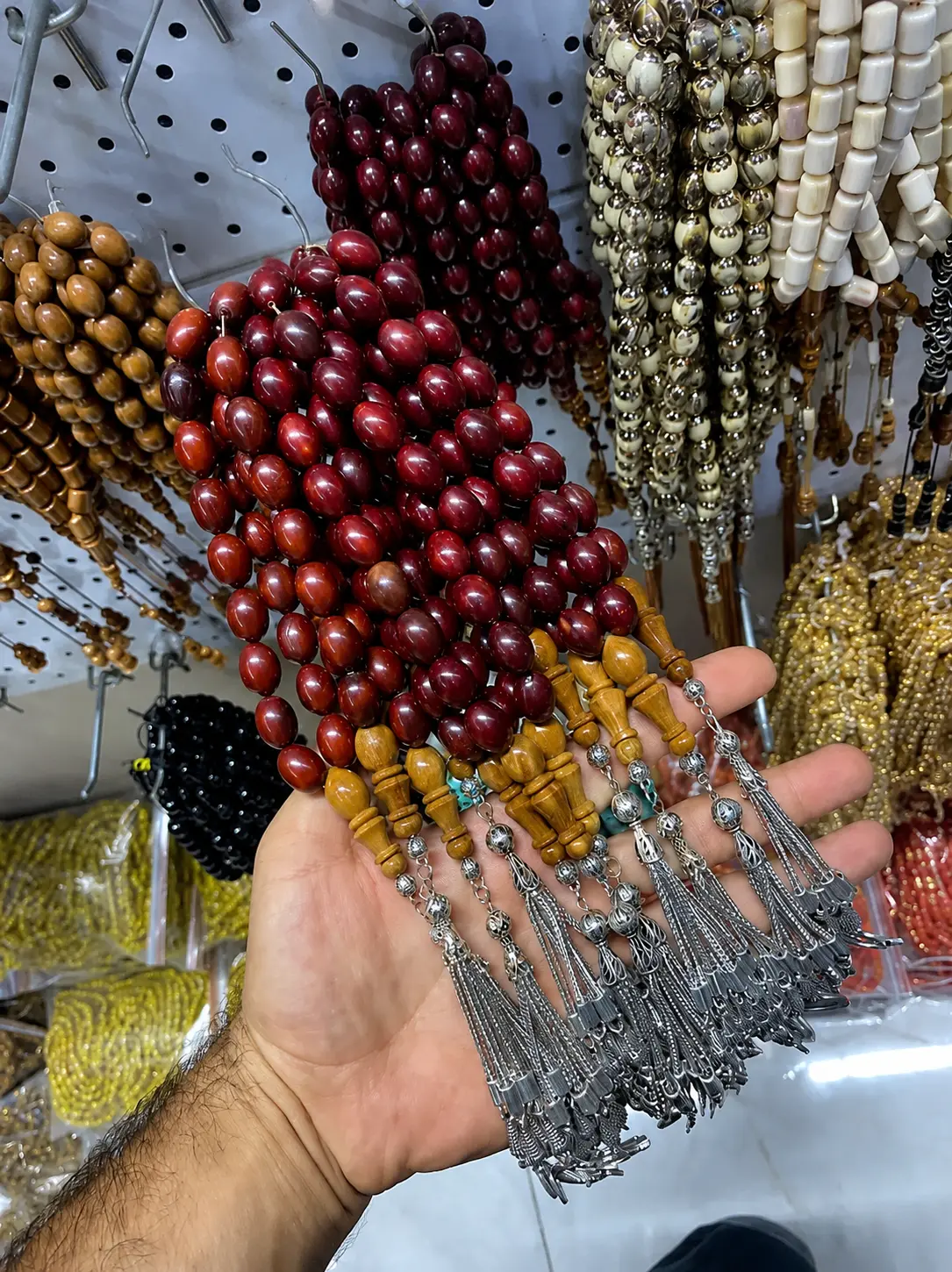
Almost everyone who buys kuka prayer beads notices the same thing a few months later: the colour is not what it was on the day of purchase. Light tan has deepened, and the beads held most often are a shade darker than the rest. Sometimes this prompts the question "is my tesbih damaged?", sometimes the relief of "so it is real after all". In this article we explain what kuka darkening is, why it happens, which factors weigh most, and whether the process can be managed.
What Is Darkening and Why Does It Happen?
Kuka is the fruit stone of a tropical palm species; for its origin and general properties see kuka wood prayer beads: wholesale and properties. Being an organic material, it interacts constantly with its surroundings. Darkening is the visible result of that interaction and is fed by four main factors:
1. Skin oil and sweat
This carries the largest share. Natural oil from the fingertips works into kuka's fine pores and combines with the pigments inside the stone to deepen the colour. That is why darkening moves fastest on the most-handled beads and the imame; an untouched string can keep its tone for years.
2. Oxidation
The natural compounds inside kuka react slowly with oxygen in the air. Like the yellowing of cut wood, this reaction is irreversible and continues, however slowly, even when the tesbih is not used.
3. Light
Daylight, and ultraviolet in particular, accelerates oxidation. A string in a sunlit display window darkens noticeably within months compared with one from the same batch kept in a drawer. For sellers this is a detail to consider in window layout.
4. Heat
Hand warmth and ambient temperature make it easier for oil to penetrate the pores. Darkening is faster in summer than in winter.
Is Darkening a Defect?
No. Darkening is kuka's natural and expected behaviour; the tesbih does not spoil, crack or weaken. On the contrary, bead-makers say the string has "ripened" or "settled", and prize it. A kuka string drawn for years and approaching black is worth more than a new one. The logic is the same as amber's ageing, paralleling the process described in why pressed amber changes colour.
What does count as a defect is different:
- A single bead clearly differing in colour from the rest (batch mismatch).
- Blotchy, mottled, uneven darkening on the surface (polish fault or moisture damage).
- Darkening accompanied by cracks, softening or flaking polish (water contact).
How Long Does Darkening Take?
There is no fixed calendar; in daily use the rough course is:
- First 1–3 months: Light tan turns slightly warmer; beads gain shine.
- 6–12 months: A coffee tone emerges; the imame and most-handled beads stand out.
- 2–3 years: Dark coffee; veins show more contrast.
- 5 years and beyond: Near-black, deep, glass-like shine — what bead-makers call "ripened kuka".
The process is faster for users with oily skin and slower for dry skin.
For Those Who Want to Speed It Up
Users who cannot wait for the dark tone apply a few traditional methods. All are safe when done in moderation:
- Regular drawing: The most natural method with the finest result. A string turned in the hand half an hour a day darkens noticeably in a year.
- Feeding with vegetable oil: A drop of olive or almond oil on a soft cloth, applied lightly to the beads, excess wiped off at once. No more than once a month; too much oil leaves a sticky, matte surface.
- Keeping in daylight: Not direct sun — a bright room is enough. Direct sun can weaken the polish.
What not to do: heating the tesbih in an oven, on a radiator or with a hair dryer; applying dye, spray lacquer or shoe polish; soaking in water. These produce damage, not darkening.
For Those Who Want to Slow It Down
Some people love the light tan tone. For them:
- Wipe the tesbih with a soft, dry cloth after use to reduce oil build-up.
- Store it in a pouch or box away from light when not in use.
- Avoid contact with perfume, cologne and hand cream; these make darkening uneven and spoil the polish.
Stopping it entirely is not possible; slowing it is.
How Real Kuka and Imitations Differ as They Darken
Darkening is where kuka separates most clearly from fakes:
- Real kuka darkens from the inside out, keeping its veins, more markedly where it is handled most. In a freshly cut bead the core stays lighter than the surface.
- Stained wood does not darken; instead the stain wears off at friction points and pale wood shows through.
- Plastic and resin never change colour; even years later they keep their day-one tone.
So when buying second-hand or antique kuka, the evenness of darkening is one of the most reliable signs of authenticity. For other tests, the safe-test approach in how to tell genuine amber can be adapted to kuka.
Notes for Sellers
Dealers selling kuka can turn darkening into a selling point: telling the customer "this tesbih will age with you" is the shortest way to convey that the product is organic and genuine. At the same time, products in the window must receive equal light and come from the same batch; otherwise tone differences appear on the shelf. For batch consistency and shelf planning in wholesale buying, see the wholesale prayer beads page.
Care and Repair
If the polish on a darkened kuka string wears over time it can be re-polished; this does not lighten the colour, it only refreshes the surface. Restringing and tassel replacement do not affect darkening. For these services, visit the repair service page.
Frequently Asked Questions
Can darkened kuka return to its original colour?
No. Darkening is irreversible; sanding the surface lightens it slightly but ruins the polish and bead diameter, and is not recommended.
Do all kuka strings darken at the same rate?
No. Light tan beads darken faster and more visibly; factory heat-darkened "burnt kuka" is already dark, so the change is less noticeable.
Does darkening change the weight?
No measurable difference; the amount of oil absorbed is far below gram level.
Conclusion
Kuka darkening is not a flaw but the material's identity. When skin oil, oxygen, light and warmth come together, light tan approaches deep black over the years, and that journey makes the tesbih more valuable. Browse the tan and coffee models in our collection on the kuka wood prayer beads page, and for questions see the FAQ or the contact page.