Kuka Wood Prayer Beads: Wholesale Buying and Properties
What kuka is, why bead-makers love it, how to spot quality kuka beads, and what to check on quantity, cut, colour and delivery when buying wholesale. A guide for dealers and exporters.
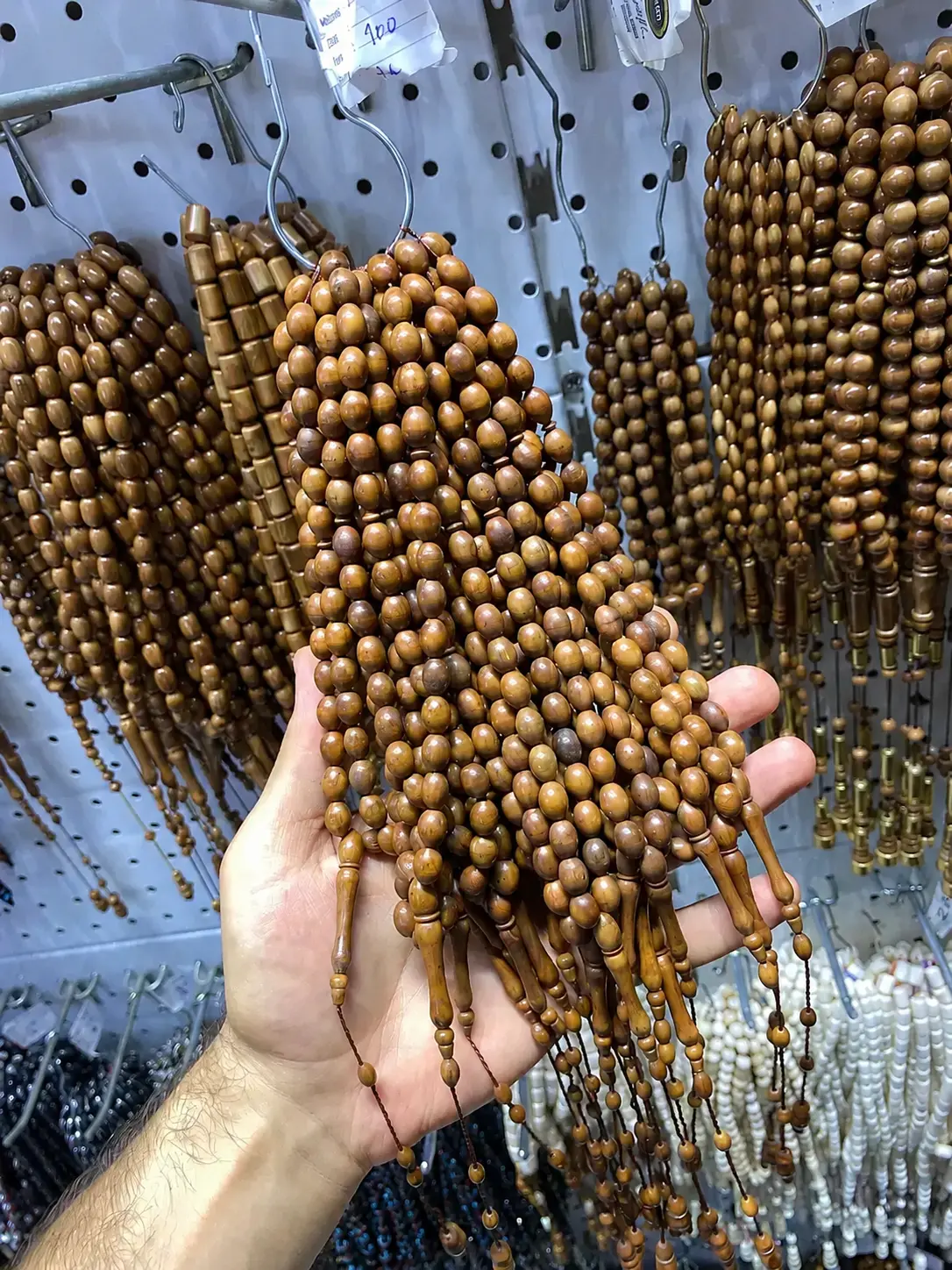
Ask an experienced bead-maker which material sells most in Türkiye after amber and the answer comes without hesitation: kuka. Light, warm, shining more with every pass through the fingers and deepening in colour over the years, kuka is the shared choice of young buyers picking their first tesbih and of collectors alike. In this article we cover what kuka wood is, what sets a good kuka tesbih apart, and what dealers and exporters should check when buying wholesale.
What Is Kuka?
What the trade calls "kuka" or "kuka wood" is not actually the trunk of a tree but the hard fruit stone of a palm species grown in tropical climates. Once dried, the stone gains an ivory-like density; it is finely veined, non-porous and easy to work. It arrives in Türkiye raw from Africa and South Asia, then is cut, drilled, polished and strung in master workshops.
Three things make kuka special for bead-makers:
- Lightness: Less than half the weight of amber or stone beads of the same size; it can be carried in the hand for hours.
- Warm, quiet draw: Beads striking each other give a muffled, soft sound. It does not draw attention in a meeting, a mosque or at a desk.
- Ageing: Kuka absorbs the oil and warmth of the hand and darkens over time. A string that is light tan when new turns coffee-brown within a few years, then nearly black. We explain why in why kuka prayer beads darken.
Properties of Kuka Beads
Colour and grain
Raw kuka ranges from light beige to tan. It can be darkened by polish and heat treatment, so the market carries three main tones: tan, coffee and "burnt kuka". In a good kuka bead the veins are fine and regular and the surface is non-porous. Coarsely veined or white-spotted beads count as low grade.
Cut
The most common kuka cuts are barley, olive, sphere and cylinder. Barley is preferred in Türkiye; sphere and cylinder sell more in the Gulf. As important as the cut is that every bead in the string shares the same diameter; the master criteria are described in the art of Ottoman-style prayer beads.
Bead count and size
Retail sells 33- and 99-bead strings; in wholesale the share of 33s is markedly higher. Bead diameter runs from 6 mm to 12 mm. 8–10 mm is considered the "standard hand size" and is the fastest-moving range in stock.
Imame and tassel
In kuka strings the imame is usually turned from the same material; the tassel may be silk or nylon. Choosing the tassel colour to match the bead tone directly affects shelf appeal. Silver-tassel and kazaz-braided models sit in the higher price segment.
How to Recognise Quality Kuka
- Weight test: Real kuka is light; in the palm it feels warmer than plastic and far lighter than stone.
- Grain check: Held to the light, fine unbroken veins should be visible. Stained wood or resin imitations either have no grain or show a print-like repeating pattern.
- Clean drilling: No burrs, chips or scorched marks around the hole.
- Sound: Beads should give a muffled "tick"; any ringing means the material is not kuka.
- Smell: Rubbed gently, kuka gives a faint woody scent; plastic imitations smell chemical.
Some of the verification methods we use for pressed amber also apply to kuka; the "safe test" principles in how to tell genuine amber hold here too.
What to Check When Buying Kuka Wholesale
1. Quantity and mix
Kuka plays the "entry product" role on the tesbih shelf: the customer touches kuka first, then moves to amber. That is why wholesale orders usually carry twice as many kuka strings as amber. For a first order, a 60/40 mix of tan and coffee tones with 8 mm and 10 mm diameters split evenly is the most balanced start. See our wholesale prayer beads page for minimum order terms.
2. Batch consistency
Because kuka is a natural material, tone can vary between batches. Products going on the same shelf should come from the same batch. We sort every batch by colour and diameter at our centre in Zeytinburnu, Istanbul, and never ship mixed batches.
3. Stock and delivery
Standard 33-bead kuka models are kept in continuous stock; in-stock items ship within 1–3 business days of order confirmation. Orders requiring special cut, diameter or tassel take 2–4 weeks of production. Shipping and return terms are on the shipping and returns page.
4. Labelling and packaging
For our dealers, every tesbih is packed in an individual pouch. Packing under the dealer's own brand label is not active yet; we are still working on solutions of this kind for our trade partners. Batches bound for the Gulf get Arabic labels and barcodes.
5. International shipping
We sell abroad on a wholesale basis only; retail sales apply within Türkiye. We ship regularly to Saudi Arabia, the UAE, Kuwait and Qatar; see wholesale prayer bead export and Saudi Arabia for country details.
Who Buys Kuka?
- Young and first-time buyers: The first choice thanks to affordability and lightness.
- Daily users: Fits in a pocket and does not break when dropped.
- Collectors: Burnt kuka and finely veined select pieces gain value over the years.
- Corporate buyers: Economical and elegant for bulk gifting; one of the most chosen materials in our corporate gifts programme.
How Kuka Is Produced at Novatesbih
We set our own standard and have production done by selected master workshops across Türkiye. Raw kuka selection, cutting, drilling and polishing happen in the workshop; colour matching, diameter control and final quality inspection happen at our centre. We are your single point of contact between you and the master. Browse the full range on the kuka wood prayer beads page and the featured model on the Kuka Prayer Beads Tan No.01 product page.
Frequently Asked Questions
Are kuka beads water-resistant?
They tolerate brief contact but must not be soaked; the stone swells when it absorbs water and the polish lifts.
What determines the price of kuka beads?
Fineness of grain, bead diameter, evenness of cut, imame workmanship and tassel type. For the wholesale price list, reach us via the contact page or the dealership form.
Can damaged kuka beads be repaired?
Yes; we offer repair service for broken cords, cracked imames and worn tassels.
Conclusion
Kuka is the most dependable product on the tesbih shelf: light, durable, affordable and more beautiful with time. Pay attention to batch consistency, diameter distribution and tassel match when buying wholesale, and the selling takes care of itself. For questions, see the FAQ or the contact page.