Blood Bağa (Tortoiseshell-Pattern) Prayer Bead Models: A Rare Craft
What blood bağa (tortoiseshell-pattern) actually is, how it differs from historical tortoiseshell, the four model families in the catalogue, the system imame, colours, selection criteria and care.
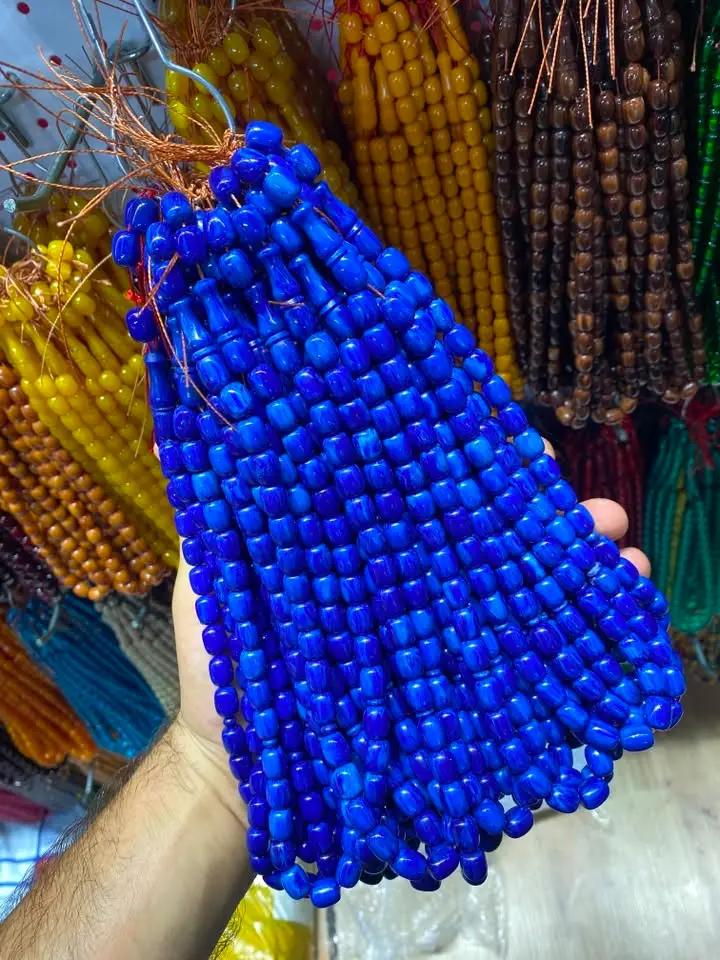
Some names in the prayer bead world describe an appearance rather than a material. "Blood bağa" is one of them. Hold a bead to the light and red veins seem to seep out of a dark brown ground, as though the shell were bleeding from within. Listed in our catalogue as tortoiseshell-pattern, this is one of the smallest sections of the collection and one of the most asked about. Here is what blood bağa actually is, how it differs from historical tortoiseshell, which model families the catalogue holds, and what to check in a string.
What Is Bağa, and Where Does "Blood" Come From?
Bağa is the traditional Turkish name for a layered, semi-translucent shell material used in bead and cigarette-holder making for centuries. For the Ottoman bead maker it ranked just behind amber: it takes shape under heat, hardens as it cools, and polishes to a deep shine. It was also one of the materials an apprentice mastered before being allowed near amber.
The word "blood" (kanlı) or "bleeding" (kanayan) describes the figure, not the type. Reddish-orange veins scattered through a dark ground appear to spread when light hits them, and that is where the name comes from. Both names mean the same thing; "bleeding" is the more common form in Turkey, while collectors tend to say "blood bağa".
Historical tortoiseshell versus today's material
This distinction deserves to be stated plainly: historical bağa came from sea turtle shell, and that species is now protected under international convention — trade in it is illegal. The blood bağa prayer beads on the market today are therefore made from a specially processed material that reproduces that texture and colour transition. It is not shell. The layered structure, the veining that opens under light and the full, short sound are all preserved; no protected animal source is involved.
The transparency matters. Anything sold as "genuine tortoiseshell" is either illegal or is in fact this same modern material. The pieces we sell belong to the second group and are described as such. We apply the same honesty on the amber side — see how to tell if an amber tasbih is genuine.
Why "A Rare Craft"?
Blood bağa is harder to work than amber, and few workshops handle it well. Three reasons:
- Layer direction: The material is layered, not homogeneous. Approach it from the wrong direction on the lathe and a layer lifts, ruining the bead. The maker has to read the direction of the figure before cutting.
- Figure matching: Across 33 beads the vein density has to stay comparable, which means planning in advance where in the block each bead will come from. Amber, being even in colour, poses no such problem.
- Polishing sensitivity: A polish that runs hot opens the gaps between layers and clouds the figure. Polishing is done slowly, at low speed.
The upshot is that a blood bağa string takes longer to produce than a rod-pressed amber string of the same size. That, more than material scarcity, is what the price reflects; for the full picture see factors that determine wholesale prayer bead prices.
The Model Families in the Catalogue
The tortoiseshell-pattern section holds four model families. The material is the same; the difference lies in the imame construction and the finish.
1. Classic Tortoiseshell-Pattern
Plain imame, slim tail, 33 beads. This is where the figure reads most clearly. Turquoise, olive green, smoke grey, brick red and honey are the tones seen most often in this family.
2. Tortoiseshell-Pattern with System Imame
The "system" imame is the most technical detail on the piece: it comes in two parts, and the tension of the cord running through it is adjusted by a threaded or push-fit mechanism. The benefit is practical — when the cord slackens over time, you can take up the slack without restringing. In blood bağa this is the largest family in the catalogue, with red, cherry, tan and olive green to the fore.
3. System Imame — Series 2
Same mechanism, different bead proportion and a wider colour range: brick red, green, purple, ivory, turquoise, black. Series 2 was put together for buyers who need colour variety on the shelf.
4. Tasselled Tortoiseshell-Pattern
Finished with a kazaz tassel. The dark ground of bağa carries a heavy tassel well, and it sits especially in balance in honey and brick red. This is the family most often chosen as a gift — for company orders see corporate gifts.
Colour and Figure
In blood bağa a colour name describes a transition rather than a single tone. The colour listed in the catalogue is the dominant tone of the bead; within it every bead carries darker and lighter veins. The tones seen most often are honey, brick red, cherry, red, tan, brown, olive green, green, smoke grey, turquoise, blue, midnight blue, purple, black and ivory.
The way the figure opens under light is the clearest point of separation from amber. In fire amber the figure is read as light passes through a translucent bead; in bağa it comes from layers stacked on one another, and the bead is more opaque. Put the two side by side and the difference is immediate.
Cut, Size and Feel
The usual cuts are barley, capsule and round. The barley cut slices the layers lengthwise, so the veining shows at its longest and most continuous — which is why most collectors prefer it. On a round cut the figure wraps in rings and reads as busier.
Bead diameter is usually 8–12 mm. Bağa sits slightly heavier than amber of the same size and gives a fuller, shorter knock when pulled. That sound is one of the classic tells collectors use. For the full set of stringing standards, see handmade prayer beads.
What to Check When Choosing
- Layer integrity: Hold the bead to the light. Whitening, flaking or separation between layers means the polish ran too hot; that bead will crack in time.
- Vein density: Veining should be comparable across beads. One bead dense with veins next to a plain one means the string was never matched.
- Drill axis: The hole must run dead centre. It matters more here than in amber, because an off-centre drill also stresses the layers.
- System imame: The mechanism should turn or seat without force. A binding system causes trouble at the next restringing.
- Depth of polish: Saturated and soft, never glassy.
- Sound: Short and full. A ring means a different material.
Care
Bağa is more heat-sensitive than amber. The rules are short:
- No direct sun, no high heat — do not leave it in a car.
- Perfume, cologne and alcohol-based cleaners dull the polish.
- Hot water and steam open the gaps between layers; do not soak it.
- Wipe with a dry soft cloth. Store in a pouch, away from light, when unused.
- Left too long in very dry air the surface can go flat; handling it now and then does the material good.
For a slack cord, tassel renewal, kazaz braiding or repolishing, reach us through the repair service page.
The Wholesale Side
Because of how it is made, blood bağa cannot be scaled up in large batches as quickly as amber; batch sizes are limited and lead times run longer. In return it is a product that stands out on a shelf and gives the "you won't find this elsewhere" feeling — placed next to amber in a collector display, the two carry each other.
Within Turkey we sell both wholesale and retail; abroad we ship wholesale only. See wholesale for terms, wholesale prayer bead export for country-level detail, and in stock for what ships immediately. We set the standard, production is carried out by the selected master workshops we work with across Turkey, and every batch passes a final inspection at our Zeytinburnu premises.
Frequently Asked Questions
Are blood bağa and bleeding bağa different things?
No — two names for the same product. "Bleeding" is the more common form in Turkey.
Is a blood bağa prayer bead real turtle shell?
No. Historical bağa was made from shell, but that source is protected today and trade in it is illegal. What we sell is a specially processed modern material that reproduces the same texture and veining.
What does "system" mean?
A two-part imame in which cord tension can be adjusted, letting you take up slack without restringing.
Which is more durable, amber or bağa?
Both hold up in daily use, but bağa is more sensitive to heat and moisture. It is, however, more resistant to scratching.
Which colour suits a gift?
Brick red and honey show the veining most clearly, and both sit in balance on a tasselled line.
Conclusion
Blood bağa is the small, characterful corner of the collection. Its value comes less from scarcity of material than from how few makers can work a layered material without damaging it. What to look for in a string is settled: intact layers, matched vein density, a centred drill, a mechanism that works cleanly and a full sound. See the collection on the tortoiseshell-pattern page, compare it against pressed amber, and bring questions to contact or the FAQ.